
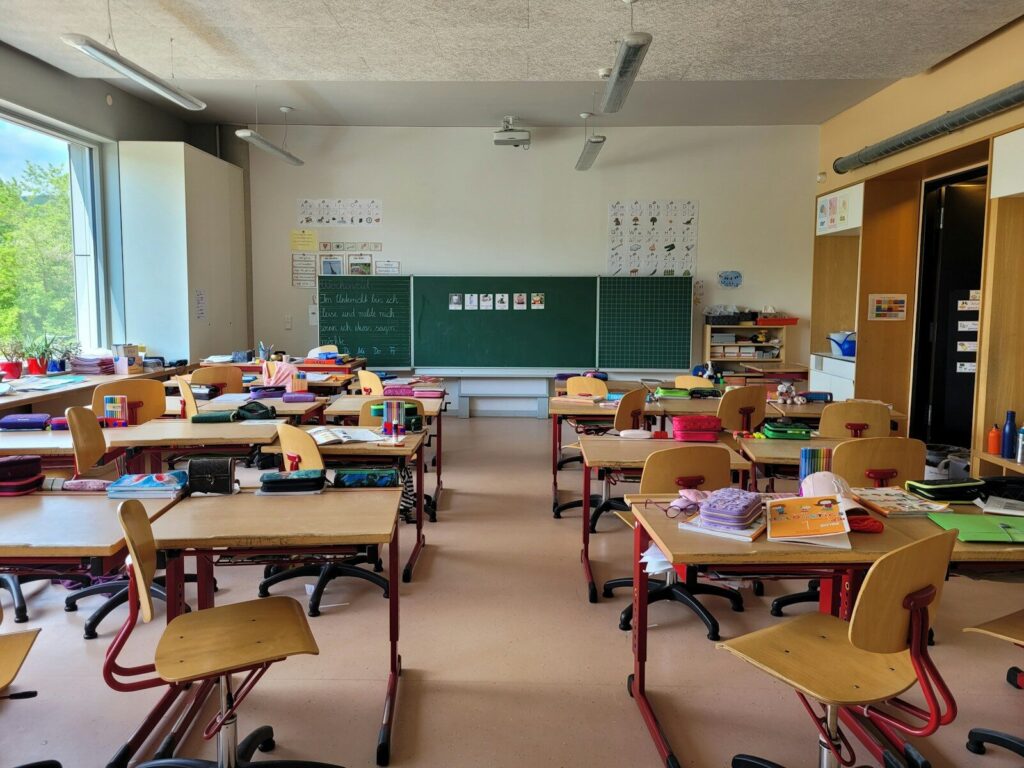
The shape of the school day has remained more or less unchanged for over a century. A bell rings at the start, lessons are blocked into roughly equal pieces, and another bell rings at the end. For many children, this works well enough. For others, the rigid structure quietly erodes their well-being in ways that are hard to spot until the damage has been done.
Why is the standard school day so fixed?
The traditional school timetable has its origins in nineteenth-century concerns about efficiency and standardisation. It was designed at a time when uniformity was prized, when sitting still and quiet was treated as a virtue in its own right, and when childhood was understood differently. Much of education has moved on since then. The basic shape of the school day, in many places, has not.
Which children find the standard day difficult?
Children with anxiety, with sensory needs, with specific learning differences, or simply with a rhythm that does not match the standard timetable, can find the conventional school day exhausting. So can children who are deeply involved in sport, the arts, or other commitments at a high level, and who need the flexibility to balance these alongside academic work. Flexible learning environments have opened up new possibilities for these families, with provision designed around the realities of each child’s life rather than the convenience of a building.
What does a flexible day actually look like?
A flexible day is not a chaotic one. It usually involves a clear structure, with live lessons at set times, but with more space around them. Lessons might be shorter or longer depending on the subject. The day might start later or finish earlier. Breaks can be built around the child’s actual energy levels rather than a fixed bell schedule. Minerva Virtual offers exactly this kind of structured flexibility, with a clear academic framework that respects each pupil’s individual rhythm.
What about the social side?
This is one of the most common concerns parents have, and it is worth taking seriously. Good online and flexible schools build social life carefully into their provision, with regular small-group lessons, opportunities for collaboration, and pastoral systems designed to ensure no pupil drifts off the radar. Many families find that the friendships their children form in these settings are unusually strong, perhaps because they are based more on shared interests and less on the accidents of being in the same building.
When is a flexible day the right choice?
Flexibility is not the right answer for every child. For many, the structure and social rhythm of a conventional school is exactly what they need. For others, particularly those for whom the standard day has become a daily struggle, the option of a different approach can be genuinely transformative. Families considering the move often describe a sense of returning to themselves as they find a setting that fits.
How families know it is working
The signs that flexible schooling is working tend to appear quietly. A child who used to dread Monday morning starts looking forward to lessons. Appetite and sleep settle. Conversation at the dinner table returns to its old rhythm. Interests outside academic work begin to flourish again. Parents who move a child into a flexible setting are often surprised by how quickly these changes appear, sometimes within a few weeks of the new arrangement starting. The transformation is rarely dramatic. It is a steady return to the child the parents remember from earlier years.
To find out more about a flexible approach to education, visit https://www.minervavirtual.com.
Author Bio
Minerva Virtual is an online school for pupils aged seven to sixteen, offering live, small-group lessons and a flexible timetable. The school is known for its supportive community and emphasis on individual well-being.
This is a collaborative post.
 Teaching Children About Different Cultures and Traditions
Leave a Reply