
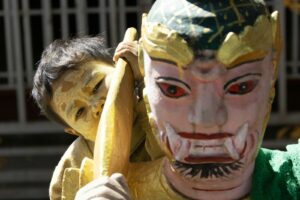
The world a child is growing into is more interconnected than any previous generation has known. Helping children understand and appreciate different cultures and traditions is no longer an optional extra. It is part of preparing them to live well in a diverse, complex society and to bring curiosity rather than wariness to people whose lives look different from their own.

Start with curiosity at home
The first lessons in cultural openness happen in the small habits of family life. A willingness to try food from different traditions, to celebrate friends’ festivals, to listen to music from around the world, and to talk with interest about other ways of doing things, all set the tone. Children pick up far more from these everyday moments than from any formal lesson.
Read widely
Books are one of the most powerful ways to bring different cultures into a child’s life. Stories set in places they have never visited, written by authors whose backgrounds differ from their own, expand the imagination in ways that nothing else quite matches. A bookshelf that includes a range of voices and settings teaches more than any number of explicit lessons could. Well-rounded education for girls usually includes reading lists that have been thoughtfully chosen to broaden pupils’ horizons in this way.
Travel when you can, and notice when you cannot
Travel is one obvious way to encounter different cultures, and family trips abroad can be genuinely formative for children. Not every family has the means to travel widely, however, and the good news is that cultural learning does not depend on holidays. Local festivals, places of worship, community events, and museums all offer ways into different traditions. Many cities offer extraordinary cultural richness within a short bus ride.
Take festivals seriously
Festivals are doorways into culture. Diwali, Eid, Christmas, Hanukkah, Lunar New Year, Vaisakhi, and many others all carry rich histories and meanings. Schools and families that mark these festivals with genuine interest, not just a token acknowledgement, give children a real sense of the texture of different traditions. The Royal Masonic School in Hertfordshire takes this kind of breadth seriously, with a school community that celebrates a wide range of cultural and religious traditions.
Encourage friendships across differences
Friendships that cross cultural lines are some of the most valuable a child can have. Through a friend, a child learns about another family’s customs, foods, language, and rhythms in a way no book or lesson can match. Parents who welcome their child’s diverse friendships, who take an interest in their friends’ families, and who include them naturally in everyday life, give their child a real gift.
Discuss differences openly and respectfully
Children notice differences and ask about them, often at moments adults find awkward. Responding openly, with accurate information and respectful curiosity, teaches children that difference is something to engage with rather than to ignore. Avoiding these conversations tends to send the message that the topic is uncomfortable, which is rarely the message a parent intends.
Watch for shallow stereotypes
Cultural learning works best when it goes deeper than surface details. A culture is not its food or its costume. It is its history, its values, its arts, its languages, and its ways of being in the world. Helping children move beyond the superficial, towards a real engagement with what makes different cultures distinctive, is the work of years rather than weeks.
Children who grow up curious about the world tend to find their place in it more easily. To find out more, visit https://rmsforgirls.com.
Author Bio
The Royal Masonic School for Girls is an independent day and boarding school in Rickmansworth, Hertfordshire, educating pupils from age two to eighteen. The school is known for its strong academic record, broad co-curricular life, and inclusive community
This is a collaborative post.
 The Benefits of Learning a Musical Instrument from a Young Age
Leave a Reply