
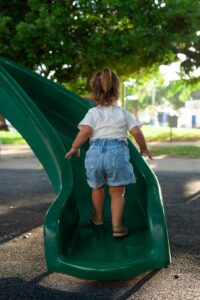
There is a particular kind of attention that children pay to the outdoors. A wide-eyed examination of a worm on a path. The careful tracing of bark on a tree trunk. The slow concentration involved in trying to balance on a low wall. These small moments are not just pleasant. They are some of the most important learning experiences of early childhood.
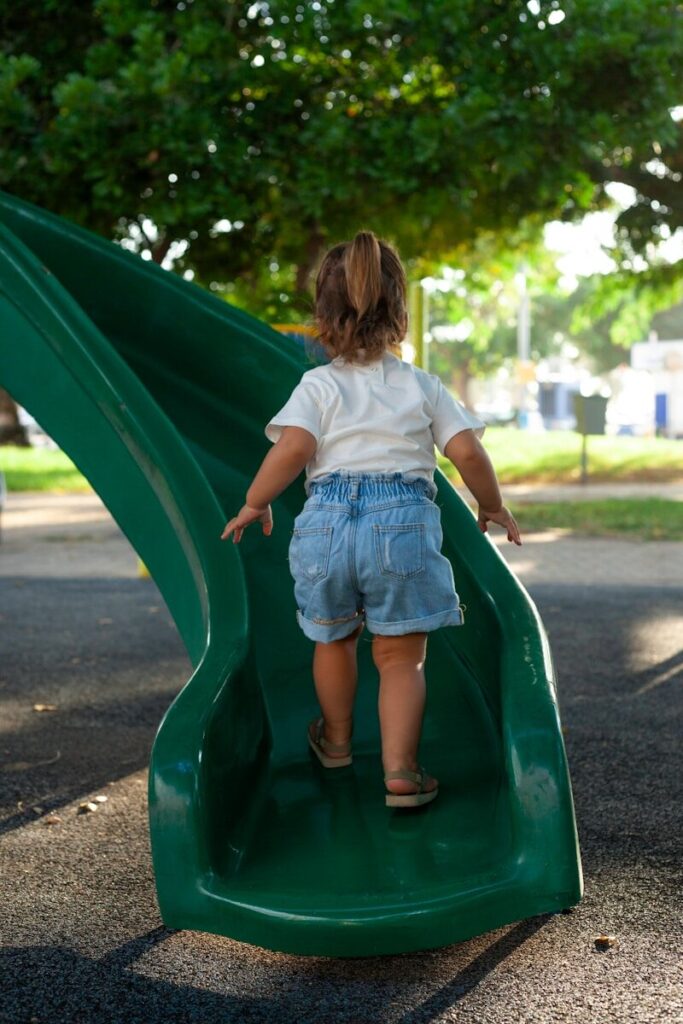
Movement is the foundation of learning
Young children learn through their bodies long before they learn through their heads. Climbing, balancing, running, and jumping all build the physical foundations on which later academic skills depend. The connection between the vestibular system, which governs balance, and the brain’s capacity for focused attention is well established. Children who spend regular time playing actively outside arrive at the desk better prepared to concentrate.
The sensory benefits
Outdoor environments offer a richness of sensory experience that indoor spaces cannot match. The smell of damp leaves, the changing light through trees, the feel of a stone in the hand, the sound of birdsong, all engage senses that screen-heavy modern childhood often underuses. A school environment that values outdoor learning understands that early years development depends on this kind of varied sensory input, and builds the school day around it accordingly.
Risk and resilience
Outdoor play offers something that indoor environments cannot easily provide. Genuine, manageable risk. A child climbing a tree, balancing along a low log, or splashing through a puddle, is engaging with risk in a way that builds judgement. They learn what their body can do, what it cannot yet do, and how to assess a situation for themselves. This is the foundation of real resilience, and it cannot be replaced by safer indoor alternatives.
Social skills in motion
Children outdoors play differently from children indoors. They negotiate rules for games, take on roles, work out conflicts, and build imaginative worlds together. The looser environment of an outdoor space allows social skills to develop in ways that a structured indoor classroom rarely permits. New Hall School in Chelmsford makes good use of its extensive grounds for exactly this kind of outdoor play and learning, particularly in its early years provision.
All weathers, not just sunshine
There is an old Scandinavian saying that there is no such thing as bad weather, only bad clothing. Children who play outside in light rain, in cold, in wind, learn to be at home in their bodies and in the world. They develop a different relationship with the seasons, and they pick up an adaptability that serves them throughout life. Schools that hold firm on outdoor time, regardless of the weather, tend to produce calmer, more curious children overall.
Time and space, not equipment
Good outdoor play does not require expensive equipment. Children given time, space, and a little freedom can find more genuine play in a corner of the garden with a few sticks and stones than in any elaborate playground. The role of adults is mostly to provide the time, to step back, and to let the play unfold.
Outdoor play is not a soft option. It is one of the most important foundations of early childhood development. To find out more, visit https://www.newhallschool.co.uk.
Author Bio
New Hall School is an independent co-educational Catholic school in Chelmsford, Essex, educating pupils from age one to eighteen. The school is known for its expansive grounds, broad curriculum, and strong sense of community.
 Stress Less with Smart Storage Solutions
Leave a Reply